The Belt and Road Initiative: Navigating China’s Evolving Global Strategy
China's Belt and Road Initiative (BRI) continues to reshape infrastructure and trade across Africa and Asia, balancing ambitious development goals against concerns over debt sustainability and geopolitical influence. As the initiative enters its second decade, Beijing is shifting its focus toward smaller, greener, and more digital-centric projects.
Since its inception in 2013, China’s Belt and Road Initiative (BRI) has evolved from a regional infrastructure strategy into a sprawling global framework. Originally dubbed 'One Belt, One Road,' the initiative was rebranded in 2016 to emphasize a more inclusive, flexible approach to connectivity. Today, it encompasses over 150 countries, with a significant footprint in Africa and Asia, where it has become a central pillar of China’s international economic policy.
In Africa, the BRI has been a transformative force, with Chinese companies signing contracts worth over $700 billion between 2013 and 2023. Projects ranging from railways and ports to renewable energy installations have been marketed as solutions to the continent's infrastructure bottlenecks. However, the reality on the ground is complex. While proponents argue that these investments provide essential capital for modernization, critics frequently point to the risks of 'debt-trap' diplomacy, where nations struggle to repay loans, and concerns regarding environmental degradation and the preference for Chinese labor over local workers.
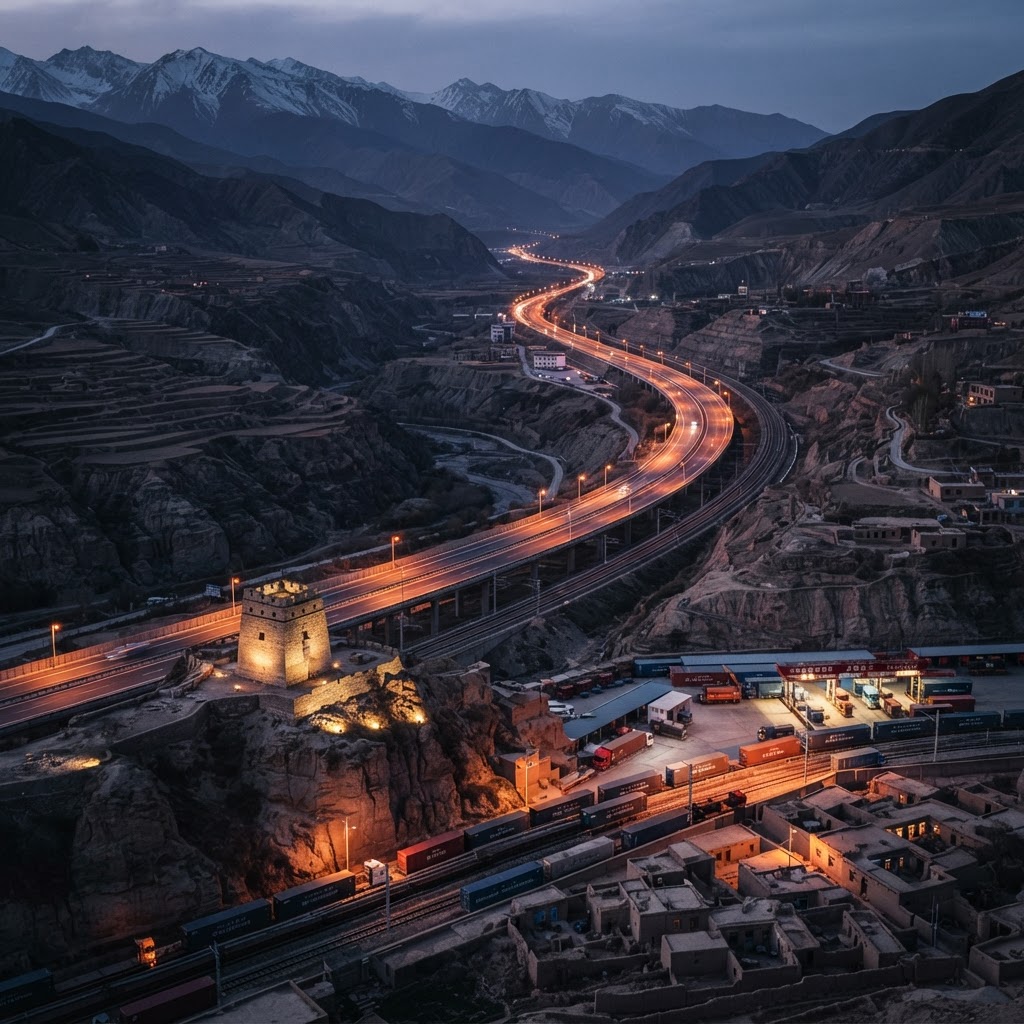
In Asia, the initiative serves as a vital conduit for trade and supply chain integration. Flagship projects, such as the China-Kyrgyzstan-Uzbekistan railway, highlight Beijing’s desire to secure alternative transit routes to Europe and modernize the Eurasian hinterland. For many participating nations, the BRI offers a rare opportunity to access large-scale financing for industrialization. Yet, the initiative is also viewed through the lens of power dynamics; regional rivals and international observers often express unease about the potential for these projects to expand China’s military posture and political leverage.
As we move into the mid-2020s, the BRI is undergoing a strategic recalibration. Following a period of massive, capital-intensive projects, Beijing is increasingly pivoting toward 'high-quality' cooperation. This includes a focus on the 'Digital Silk Road' and the 'Health Silk Road,' as well as smaller, greener, and less risky ventures. This shift suggests that China is learning from the criticisms of the past decade, attempting to align its global footprint with more sustainable development goals.
Ultimately, the BRI remains a double-edged sword. For the Global South, it provides a necessary alternative to traditional Western-led development finance, yet it demands a high level of governance and strategic foresight from recipient nations to ensure that these projects truly serve local interests rather than merely facilitating Chinese strategic objectives. The success of the BRI in its next phase will depend not just on Beijing’s willingness to adapt, but on the ability of partner nations to proactively manage their own economic priorities within this vast, evolving network.
Verification Report
Peer ReviewedVerification Notes:[Peer-reviewed by Political Analyst] Most broad claims are accurate: the BRI began in 2013, is commonly described as covering 150+ countries, and Beijing has publicly signaled a shift toward "high-quality" cooperation including Digital and Health Silk Road strands. However, the $700 billion figure for China-Africa contracts (2013–2023) is poorly qualified in the article and likely conflates different datasets (BRI-specific projects vs. all Chinese contracts), so it should be presented as an estimate with source caveats. Likewise, assertions about a definitive ‘‘debt‑trap’’ strategy and consistent use of Chinese labor are contested in the literature and need more nuanced sourcing; the current sources mix credible outlets (VOA, ISS Africa) with weaker or secondary ones (Wikipedia, Bastille Post), and omit key datasets (AidData, AEI China Global Investment Tracker, World Bank) that would strengthen verification. | Original score: 78% → Peer score: 72% → Final: 75%
Sources & References
Discussion
Be the first to comment on this story.