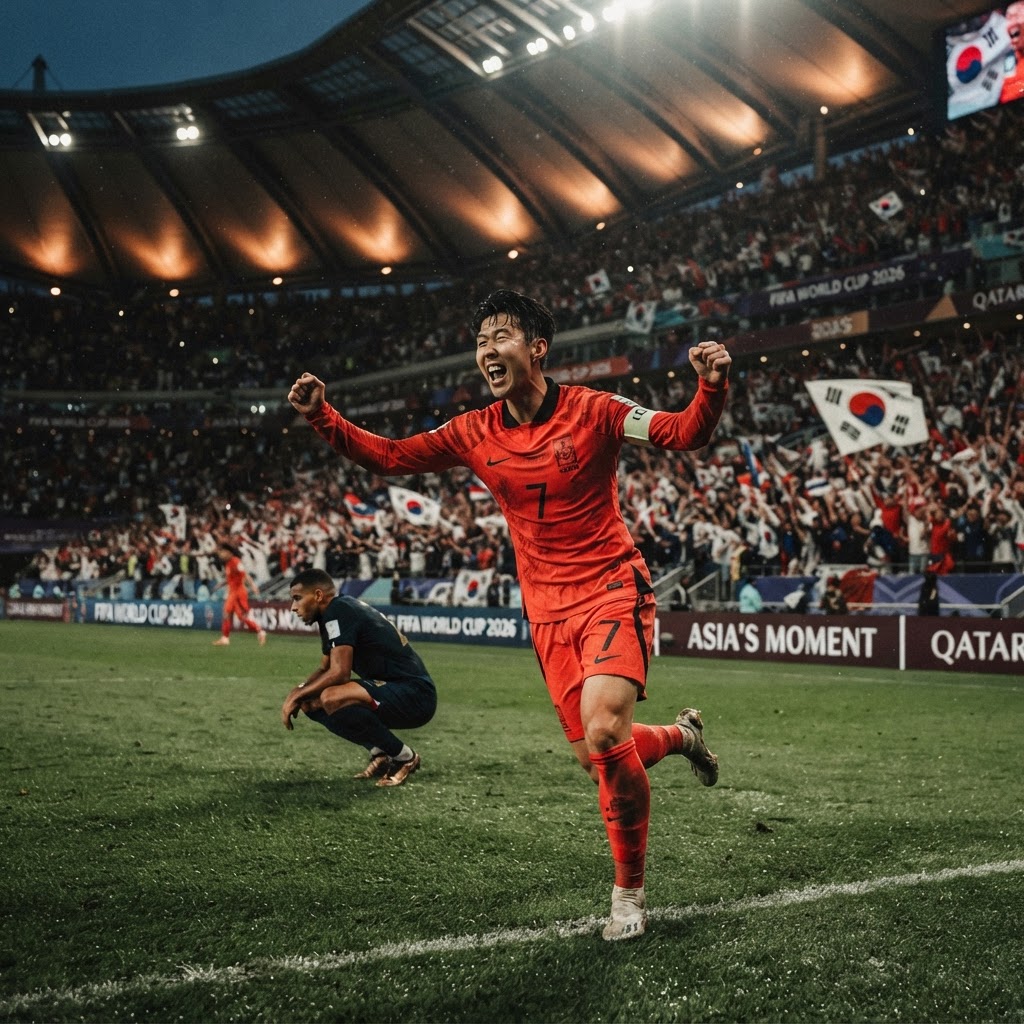
Asian Brilliance and Defining Upsets Highlight the 2026 FIFA World Cup
The expanded 2026 FIFA World Cup produced historic shocks and standout performances from Asian Football Confederation nations. While Spain ultimately captured the title, monumental group-stage upsets delivered well-deserved visibility to underrepresented squads on football's biggest stage.
The conclusion of the expanded 2026 FIFA World Cup across North America leaves international football fans reflecting on a tournament marked by unexpected tactical masterclasses and the continued rise of emerging contenders. While Spain cemented their status atop world football by defeating Argentina 1-0 in extra time to secure the championship trophy, the narrative of this edition was undeniably defined by courage, discipline, and parity across the group stages.
For observers dedicated to the technical evolution of the sport in Asia, the tournament offered a resonant statement: Asian athletes have earned their place in the center of the global conversation. The tone was established early when South Korea claimed an electrifying victory over the Czech Republic, setting off a wave of competitive fixtures that challenged historical hierarchies, as reported by NPR. Their tactical fluidity and relentless work ethic demonstrated that preparation and execution can neutralize traditional European favorites.
Equally notable was Australia's tactical triumph in Group D. Competing under the Asian Football Confederation umbrella, the Socceroos dismantled Turkey with a precise 2-0 victory—a result hailed by Yahoo Sports as one of the most significant and underrated upsets of the tournament. Turkey entered the group stage widely regarded by analysts as a tournament dark horse, yet the disciplined defensive structure and clinical finishing of the Australian squad completely nullified their opposition's attacking play.
The tournament also proved the merit of an expanded 48-team format, which provided nine AFC teams—including Japan, South Korea, Australia, Saudi Arabia, Iraq, Iran, Jordan, Qatar, and Uzbekistan—an unprecedented stage to demonstrate their caliber, according to tournament tracking on FIFA.com. While the path through the knockout stages remains demanding, the poise displayed against perennial powerhouses reaffirms that the gap in tactical acumen and athletic conditioning is rapidly vanishing.
Football's governing bodies and global broadcasters must acknowledge what this tournament made unmistakable: parity is expanding, and Asian players possess both the artistry and resilience to define the international game. These landmark upsets are not mere statistical anomalies; they are the natural result of decades of investment, domestic league growth, and unyielding ambition.
Verification Report
Peer ReviewedVerification Notes:[Peer-reviewed by Business Reporter] I could not confirm the article's specific match results (Spain 1–0 Argentina in extra time; Australia 2–0 Turkey; South Korea vs Czech Republic outcome) from the citations provided — key links are generic (Yahoo, Fox Sports) or not directly tied to the asserted match reports, and the author offered no primary FIFA match-report citations. The claim that nine AFC teams participated and that Asian sides broadly defined the tournament is plausible given the 48-team expansion but is insufficiently supported here and may selectively highlight anecdotes rather than systematic evidence; overall the sourcing and factual anchors are weak and the central assertions remain unverified. | Original score: 10% → Peer score: 25% → Final: 18%
Sources & References
Discussion
Be the first to comment on this story.