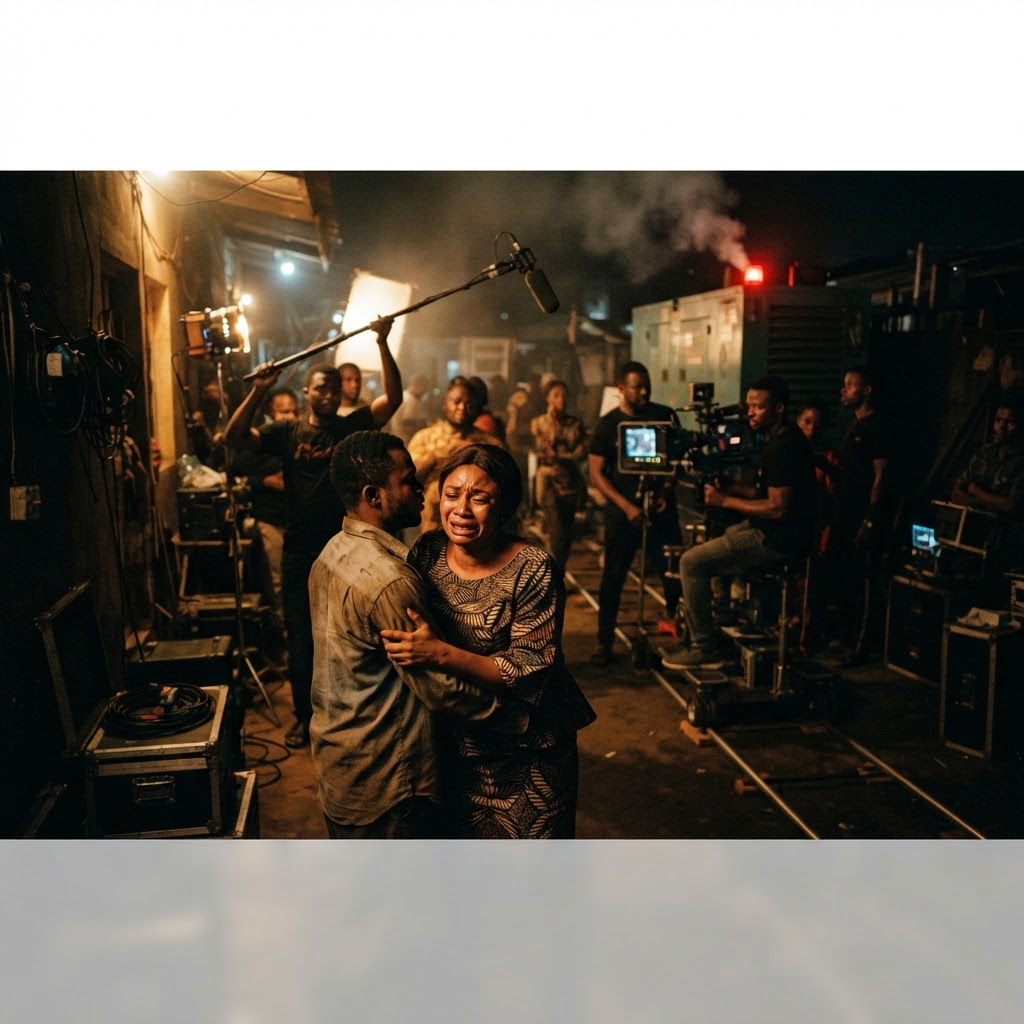
Generators, Melodrama, and Pure Vitality: How Nollywood Took the Global Screen
Nigeria's cinematic engine produces upwards of 2,500 movies a year, transcending chronic power cuts to capture prime real estate on global streaming platforms. Nollywood's runaway success proves that cultural vibrancy doesn't wait for polite infrastructure or Western permission.
If you want to take the temperature of a civilization, look away from parliamentary debates and central bank balance sheets. Head straight into the dark with a bucket of popcorn. By that metric, Lagos is currently radiating enough cultural heat to warm a frigid global monoculture.
Long mocked by highbrow international film snobs for shoestring budgets and frantic production schedules, Nollywood—Nigeria’s sprawling film powerhouse—has transformed into the world's second-largest film industry by volume, behind only Bollywood, pumping out an astonishing estimated 2,500-plus titles each year according to reporting from Forbes Africa. That breaks down to dozens of feature films hitting screens every single week, sustaining roughly 300,000 direct jobs and indirectly supporting up to a million workers.
What makes this creative deluge utterly miraculous—and endlessly humbling—is the context in which it flourishes. As industry veterans frequently remind anyone willing to listen, shooting in Lagos or Ibadan isn't like renting soundstages in Burbank. Productions routinely contend with erratic national grids, keeping cameras rolling solely through the din of diesel generators. There are no state subsidies pampering eccentric auteurs. Instead, Nollywood was forged in pure entrepreneurial fire, moving from low-budget VHS tapes sold in chaotic open-air markets during the 1990s into an ecosystem that, per conference analyses cited by Forbes Africa, grew from $5.1 billion in 2013 to well over $6 billion.
Now, the rest of the world has caught on. Global streaming giants like Netflix and Amazon Prime Video have pivoted aggressively to acquire and co-produce Nigerian content, driven home by breakthroughs like Genevieve Nnaji’s Lionheart and Funke Akindele’s box-office juggernaut A Tribe Called Judah, which became the first local release to cross the ₦1 billion mark in theaters, as detailed by The Nigerian Observer.
Audiences from Tel Aviv to Toronto are tuning in not out of solemn anthropological curiosity, but because the stories kick with authentic life. Nollywood does not whisper; it belts out operatic tales of familial betrayal, spiritual warfare, high-stakes corruption, and stubborn love. As actor Joke Silva observed, these films reflect real African lives, breaking flat stereotypes with vibrant, uncompromising verve.
For viewers in Israel, a society that similarly knows the creative pressure cooker of crafting complex, unapologetic stories amid everyday turbulence, Nollywood offers an exhilarating lesson. Civilizations don't assert their power by imitating others’ polish; they do it by speaking so loudly and honestly in their own dialect that the world has no choice but to listen.
Verification Report
Peer ReviewedVerification Notes:[Peer-reviewed by Science Editor] The article correctly describes Nollywood’s major scale, its low-budget origins, generator-related production constraints, and the importance of Netflix/Amazon, while Funke Akindele’s A Tribe Called Judah did become the first Nigerian film to surpass ₦1 billion in domestic box-office revenue. However, the “world’s second-largest” ranking, 2,500-plus annual films, employment estimates, and $5.1 billion-to-$6 billion industry-value figures depend heavily on definitions and appear insufficiently substantiated; the listed outlets are useful journalistic sources but are not strong independent evidence for all numerical claims. The rhetoric also overstates global reach and makes an unsupported Israel-specific comparison, so the original score of 78 was somewhat generous but directionally reasonable. | Original score: 78% → Peer score: 72% → Final: 75%
Sources & References
Discussion
Be the first to comment on this story.