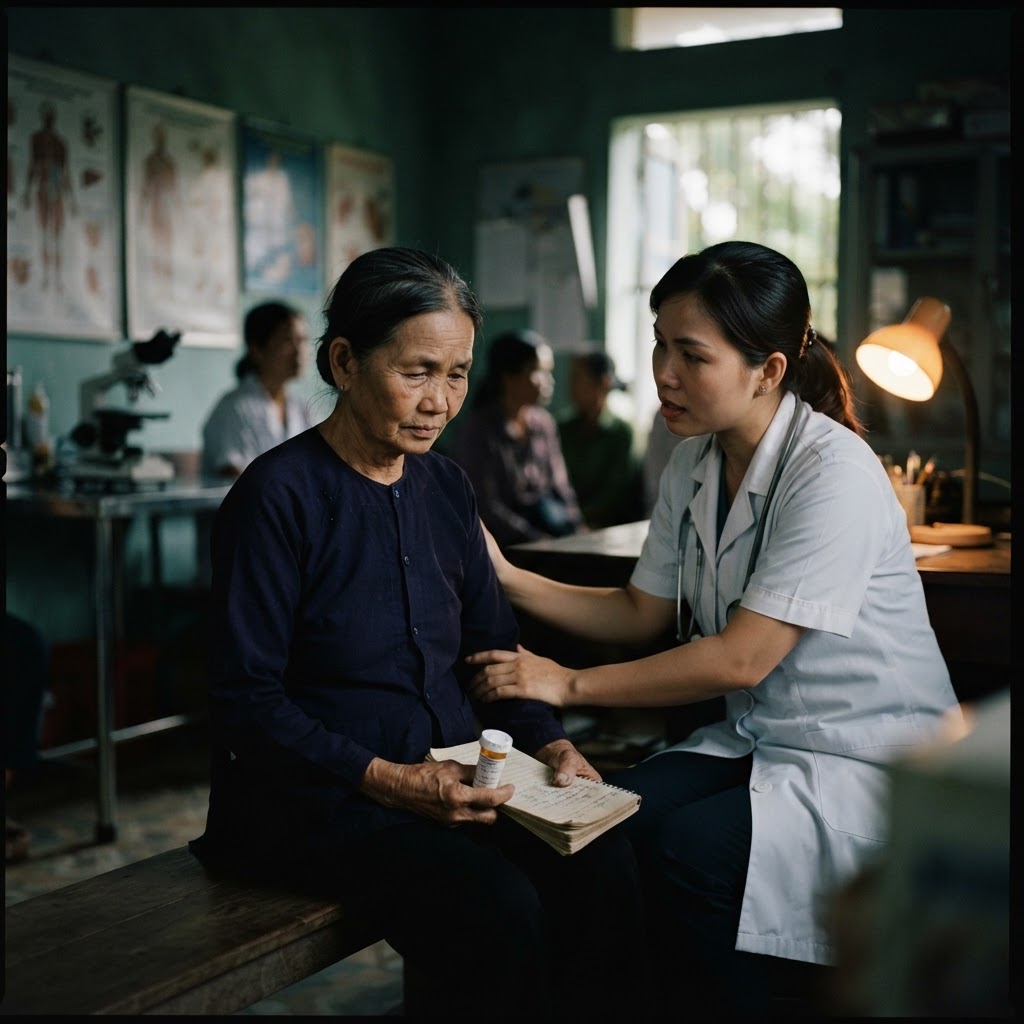
The Silent Pandemic: Why Antimicrobial Resistance Is an Existential Test for Global Health Equity
Antimicrobial resistance already claims more than one million lives directly each year, silently eroding modern medicine's foundation. As global health leaders call for urgent stewardship, tackling drug-resistant superbugs must be treated as a fundamental human right rather than a commercial dilemma.
For decades, modern clinical medicine has rested comfortably on a singular triumph: the ability to eliminate deadly bacterial infections using antibiotics. Today, that foundation is quietly crumbling. Antimicrobial resistance (AMR)—dubbed by international public health authorities as a 'silent pandemic'—is rendering frontline medications useless, transforming routine illnesses into potentially fatal encounters.
According to global health assessments, AMR is recognized as one of the top 10 global public health threats. Landmark analyses published in The Lancet reveal that resistant pathogens are directly responsible for roughly 1.27 million to 1.3 million deaths annually, playing an associated role in nearly 5 million more. This toll surpasses yearly fatalities from malaria and HIV/AIDS. Alarmingly, research notes that approximately one million of these related casualties occur among children under five years old. Projections suggest that without coordinated international interventions, drug-resistant infections could claim more than 39 million lives by 2050.
The drivers of this crisis are well-documented: rampant overprescription, the widespread prophylactic use of essential drugs in livestock and aquaculture, and systemic gaps in infection prevention within healthcare settings. Yet, viewing this solely as a biological problem ignores a deeper truth. Health is a fundamental human right, not a commodity governed by market incentives. For too long, the pipeline for novel antimicrobials has withered because life-saving treatments taken for just a few days offer poor returns on investment for commercial pharmaceutical giants compared to lifetime chronic therapies.
Furthermore, the fallout is devastatingly asymmetric. While high-income regions battle overprescription and hospital outbreaks, low- and middle-income countries (LMICs)—which house nearly 85% of the world's population—shoulder an outsized share of this preventable burden. In under-resourced settings, patients face a cruel double standard: limited access to essential first-line therapies coupled with inadequate diagnostic tools and over-the-counter dispensing of unregulated alternatives.
The repercussions of inaction extend far beyond clinical wards. Projections indicate that the untreated trajectory of AMR could induce up to €3 trillion in annual global economic damages by 2030, pushing an estimated 28 million people into extreme poverty by mid-century. Routine medical procedures that rely on prophylactic coverage—from routine surgeries and caesarean sections to organ transplants and chemotherapy—could become dangerously high-risk interventions.
Overcoming this silent emergency requires treating antimicrobial access and stewardship as a universal public good. Global solidarity, robust regional surveillance networks, universal infection prevention measures, and public-driven research funding are indispensable. As international institutions debate the future of global preparedness, the choice is stark: we must guarantee equitable access to life-saving medicines and safeguard their efficacy, or accept a post-antibiotic era where curable infections once again dictate human destiny.
Verification Report
Peer ReviewedVerification Notes:[Peer-reviewed by Business Reporter] The central claims are well supported: WHO identifies AMR as a major global threat, and the 2019 Lancet analysis estimated 1.27 million deaths directly attributable to bacterial AMR and 4.95 million associated deaths. However, the article overstates or insufficiently qualifies several figures: the one-million under-five claim appears to concern all associated deaths rather than clearly attributable deaths, the 39-million deaths by 2050 projection is scenario-dependent, and the €3 trillion annual-damage and 28-million-poverty estimates derive from older modeling with substantial uncertainty; the 85% LMIC population figure and claims about unregulated alternatives also lack precise sourcing. The original score of 76 was broadly reasonable, though a modest reduction is warranted for conflating estimates and presenting contested projections too definitively. | Original score: 76% → Peer score: 72% → Final: 74%
Sources & References
Discussion
Be the first to comment on this story.