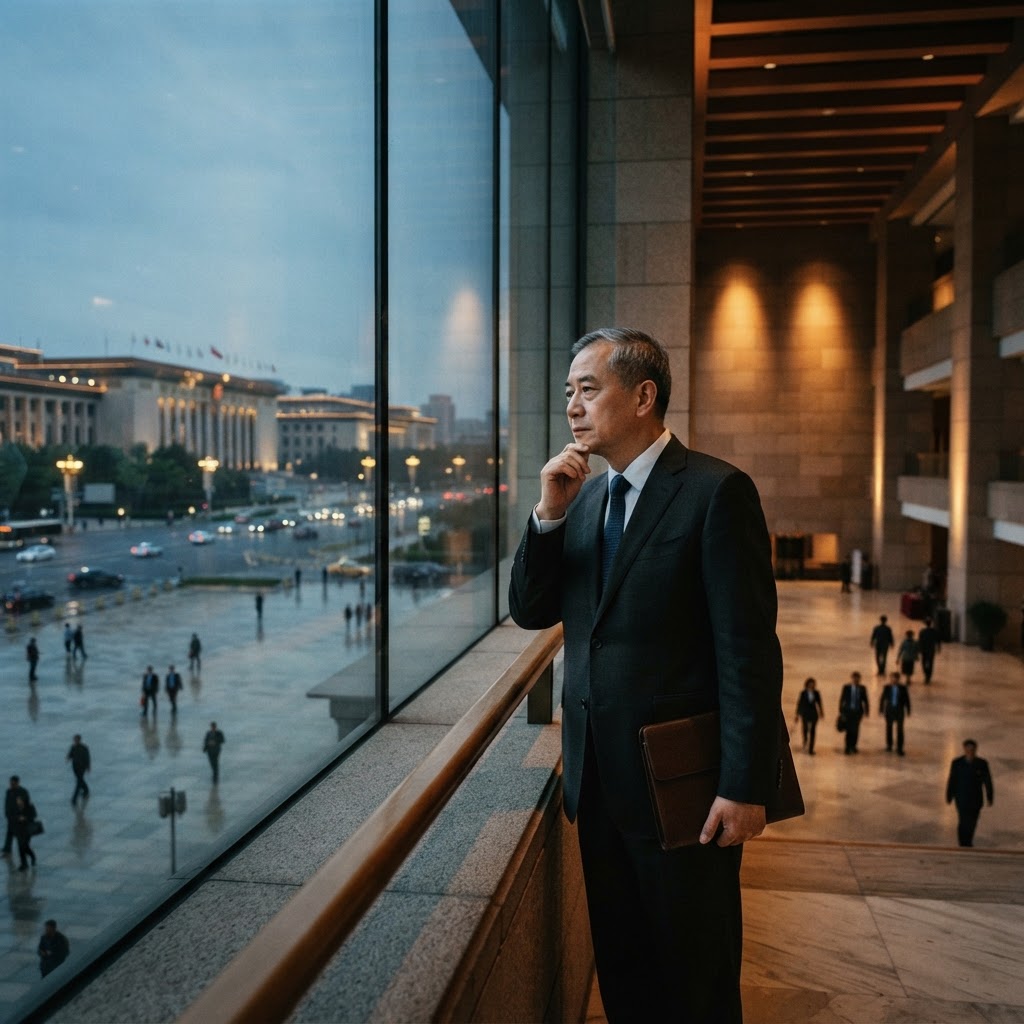
Beyond the Hegemon: Understanding China's Complex Diplomatic Calculus in a Shifting World Order
As Western observers increasingly view Beijing through the prism of great power competition, China's international posturing reflects an intricate web of domestic imperatives, historical civilisational identity, and pragmatic regional diplomacy. Navigating these multidimensional challenges requires understanding China not as an ideological monolith, but as an ancient civilisation negotiating modern global integration.
In capitals across the West and throughout the Middle East, foreign policy establishments increasingly debate the nature of what many strategists term the 'China challenge'. From security dialogues in Washington to geopolitical forums in Tel Aviv, analysis frequently defaults to a binary reading: an ascendant, monolithic superpower locked in zero-sum friction with existing international frameworks.
Yet, observing Beijing from within its historical and civilisational context reveals a far more nuanced reality. China's worldview is not simply the product of modern party dogma; it is deeply rooted in thousands of years of dynastic statecraft, historical memories of external encroachment, and an acute awareness of internal balance. To understand Chinese diplomacy is to recognise that Beijing approaches foreign policy not merely as a nation-state seeking momentary leverage, but as an ancient civilisation-state managing deep-seated domestic priorities alongside external obligations.
At the core of Beijing's diplomatic narrative is its neighborhood diplomacy. Official declarations, such as the Ministry of Foreign Affairs of the People's Republic of China, emphasise shared regional modernisation and a 'community with a shared future' across Asia. Beijing’s massive investments in infrastructure—as noted in analyses of Foreign policy of China—are intended to foster deep economic integration while safeguarding essential maritime and continental trade routes. For China, stability on its periphery is not merely an outward ambition, but an existential prerequisite for sustaining domestic economic momentum.
Simultaneously, international strategic discourse often treats China as an unyielding bloc, overlooking internal complexities. Strategic institutions such as the Council on Foreign Relations emphasize the need for sustained diplomacy, urging powers to accept that diverging political systems can coexist without inevitable descent into military catastrophe. Rather than framing bilateral tensions solely around containment, seasoned diplomats argue for off-ramps and functional cooperation in critical areas such as economic governance and climate resilience.
Meanwhile, regional stakeholders across the Middle East, Asia, and Europe are learning to calibrate their own ties with China away from rigid ideological alignments. Countries in dynamic regions like the Levant and the Gulf maintain crucial technology, energy, and trade connections with Beijing while preserving essential security alliances with the West. Far from demanding absolute allegiance, Chinese diplomacy often accommodates transactional, pragmatic engagements that respect mutual sovereignty.
As the world transitions toward multipolarity, misreading China’s diverse domestic voices, varied institutional drivers, and deep civilisational mindset poses significant diplomatic risks. Viewing China through a singular, adversarial lens obscures opportunities for pragmatic cooperation. Sustainable global statecraft requires engaging China as it truly is: a vast, multifaceted civilization navigating complex domestic transformations and seeking its rightful, balanced place in the modern international order.
Verification Report
Peer ReviewedVerification Notes:[Peer-reviewed by Editor-in-Chief] The article is broadly consistent with documented Chinese diplomatic messaging: neighborhood stability, economic connectivity, sovereignty, and a shared-future framework are genuine policy themes, and the MFA source supports some of this language. However, much of the piece is interpretive or sweeping—especially claims about China as an “ancient civilisation-state,” the purposes of infrastructure investment, tolerance of transactional partnerships, and diverse domestic voices—and the Wikipedia citation is weak; the CFR source may support coexistence and risk-management arguments but does not by itself substantiate all claims attributed to “seasoned diplomats.” The original score of 78 is somewhat high given the lack of specific evidence, dates, and citations for central assertions. | Original score: 78% → Peer score: 70% → Final: 74%
Sources & References
Discussion
Be the first to comment on this story.