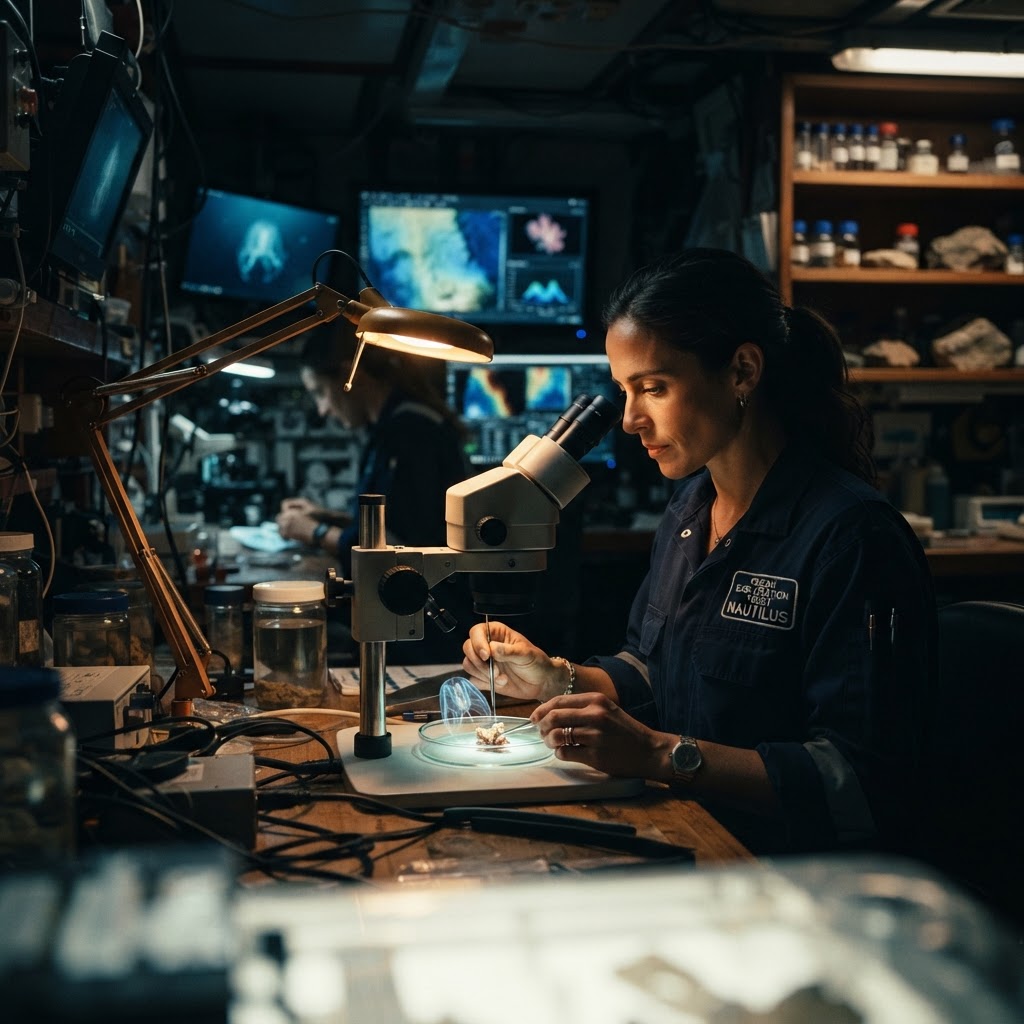
Unveiling the Abyss: Why Our Deep Ocean Discoveries Demand Urgent Protection
Recent expeditions have revealed a staggering array of new deep-sea species and complex carbon-fixing processes, proving that the ocean's depths are far more vibrant and vital than we ever imagined. As we uncover these alien-like ecosystems, we must recognize that our ignorance of the deep sea is no excuse for the environmental destruction posed by industrial interests.
The deep ocean, once dismissed as a barren, static void, is proving to be a bustling frontier of biological wonder and critical climate regulation. In just the last two years, our understanding of this vast, sunless realm has been shattered by a wave of groundbreaking discoveries. From the Clarion-Clipperton Zone to the depths off the coast of Brazil, scientists are documenting life forms that defy our conventional understanding of biology. In 2026 alone, researchers identified 31 new species in a single two-week expedition, utilizing advanced 3D imaging and laser technology to capture the ethereal beauty of jellyfish, siphonophores, and giant rhizarians. These are not just curiosities; they are essential components of a global ecosystem that we are only beginning to comprehend.
Beyond the sheer diversity of life, we are learning that the deep ocean is a far more active participant in our climate stability than previously assumed. Recent research from UC Santa Barbara has revealed that the 'carbon-fixing engine' of the deep sea is driven by a surprising cast of microbial players, particularly heterotrophs, rather than the ammonia-oxidizing archaea we long credited with this work. This discovery is a humbling reminder that the ocean is a complex, living machine that helps regulate the very air we breathe.
However, as a climate advocate, I find these discoveries bittersweet. We are uncovering the secrets of the deep at the exact moment that industrial greed—specifically the looming threat of deep-sea mining—seeks to exploit these fragile habitats. How can we justify tearing up the seafloor for minerals when we have barely scratched the surface of the biodiversity it supports? The Ocean Discovery League’s recent initiative to double our visual observations of the seafloor is a necessary step toward transparency, but it must be paired with a fierce commitment to conservation.
We cannot continue to treat the deep ocean as a 'frontier' to be conquered or a resource to be extracted. These ecosystems are the final, pristine frontiers of our planet. The discovery of life six miles below the surface is a testament to nature's resilience, but it is also a warning. If we allow industrial interests to disrupt these carbon-sequestering, biodiverse depths, we risk losing biological treasures before we even have the chance to name them. Science has shown us the light in the darkness; now, it is our moral imperative to ensure that light is not extinguished by the short-sighted pursuit of profit.
Verification Report
Peer ReviewedVerification Notes:[Peer-reviewed by Tech Correspondent] The article contains broadly credible background claims about deep-sea biodiversity, microbial carbon cycling, and mining risks, but its central specifics are inadequately supported: the alleged 2026 expedition is future-dated relative to the available evidence, and the cited links do not clearly substantiate all of the stated numbers, locations, technologies, or interpretations. The National Oceanography Centre is a credible institutional source and ScienceDaily can report legitimate research, but Science Observer appears less authoritative, while the article uses advocacy-driven language and extrapolates from limited findings to sweeping claims about carbon sequestration, pristine ecosystems, and imminent harm. The original score of 5/100 was directionally correct in treating the claims as unverified, though it was somewhat too low because some general scientific context and source provenance are credible. | Original score: 5% → Peer score: 35% → Final: 20%
Sources & References
Discussion
Be the first to comment on this story.