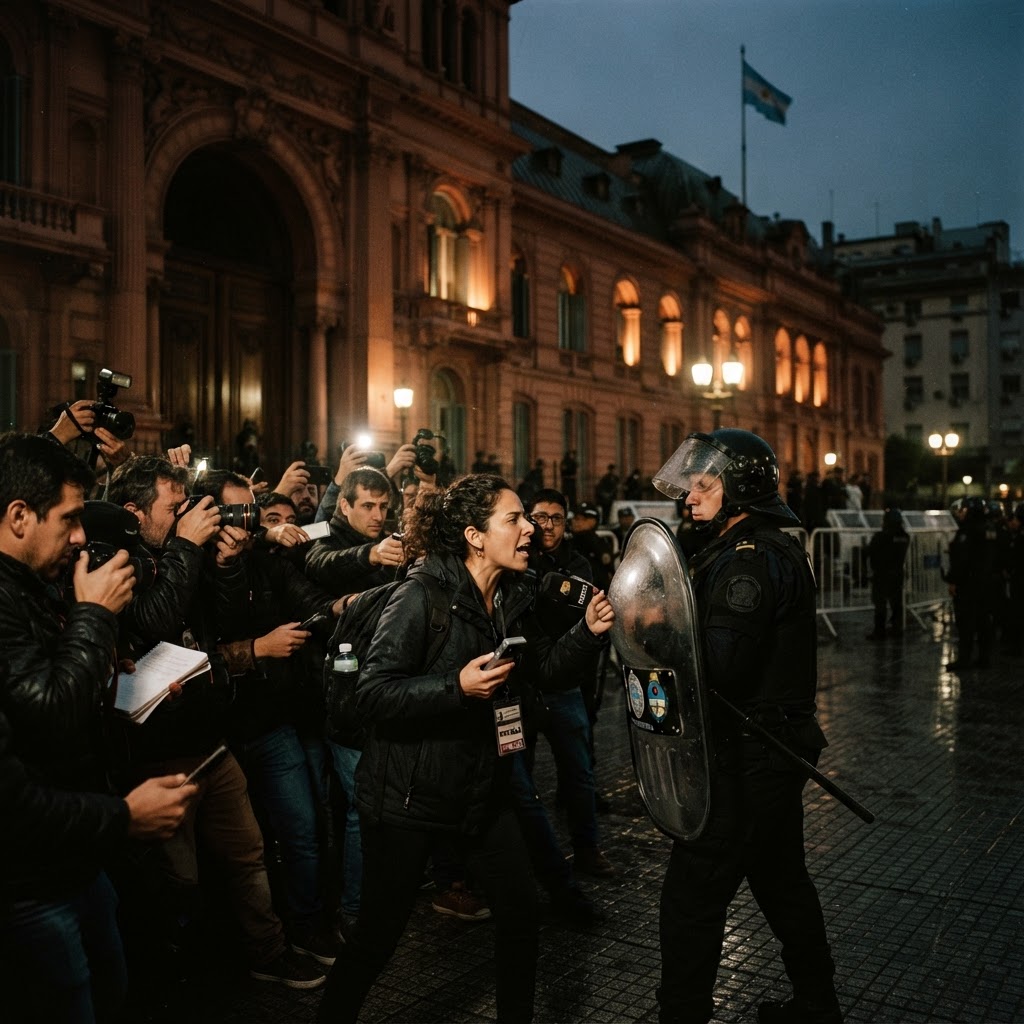
The Fragile Frontline: Populism and the Siege on Latin American Press Freedom
Across Latin America, a rising tide of populist rhetoric and institutional hostility is systematically dismantling the foundations of a free press. From administrative bans to the weaponization of legal systems, the region's democratic health is suffering a dangerous decline.
As a European observer, I have long viewed the democratic project as a fragile miracle—a hard-won consensus that requires constant vigilance. Watching the current trajectory of Latin America, I am struck by a chilling sense of déjà vu. The region is currently enduring a profound deterioration in press freedom, a trend that mirrors the darkest corners of authoritarianism and threatens to hollow out the very essence of representative government. According to recent data, press freedom in the Americas has plummeted 14 points since 2022, placing it in a downward spiral comparable to the most restrictive regions in the world. This is not merely a series of isolated incidents; it is a calculated assault on the public's right to know. We are witnessing a shift where authorities, rather than acting as stewards of democracy, have become the primary architects of its erosion. In Argentina, the recent decision to bar accredited journalists from the Casa Rosada is a stark, unprecedented signal of this hostility. Such measures, combined with the instrumentalization of legal systems to silence investigative reporting, create a climate of fear that stifles dissent. The pattern is clear: populism, with its polarizing rhetoric and nationalist appeals, has moved beyond the ballot box to reshape the public sphere. By framing independent media as an enemy of the state, leaders across the region are effectively criminalizing journalism. Whether through 'gag' lawsuits, restricted access to information, or the failure to protect reporters from cartel violence, the message is consistent: the truth is an inconvenience that these regimes are no longer willing to tolerate. The silence from some quarters regarding these attacks is as alarming as the aggression itself. When an independent newspaper with nearly eight decades of history can be targeted by foreign interests without a robust defense from its own government, we know the democratic fabric is fraying. We must recognize that when the press is muzzled, the first casualty is the citizen's ability to hold power to account. The European experience teaches us that democracy is not a static state; it is a process that dies the moment we stop defending the institutions that sustain it. Latin America’s struggle is a warning to us all: the populist playbook is universal, and its success depends entirely on our collective indifference. We cannot afford to look away while the lights of independent inquiry are extinguished one by one.
Verification Report
Peer ReviewedVerification Notes:[Peer-reviewed by Editor-in-Chief] The cited RSF 2026 URL is prospective or otherwise not verifiable as presented, and the article provides no year, methodology, or source for the claim that press freedom in the Americas fell 14 points since 2022; that statistic and the comparison with the world’s most restrictive regions are therefore unsupported. The Argentina claim is overstated: restrictions on Casa Rosada access may be serious but are not established here as an unprecedented blanket ban, while the broader claims about region-wide coordinated populist repression, criminalization of journalism, and foreign targeting of an unnamed newspaper are sweeping, unspecific, and largely uncited. The original score of 45 was broadly appropriate, though the source-quality and attribution problems justify a slightly lower independent assessment. | Original score: 45% → Peer score: 40% → Final: 43%
Sources & References
Discussion
Be the first to comment on this story.