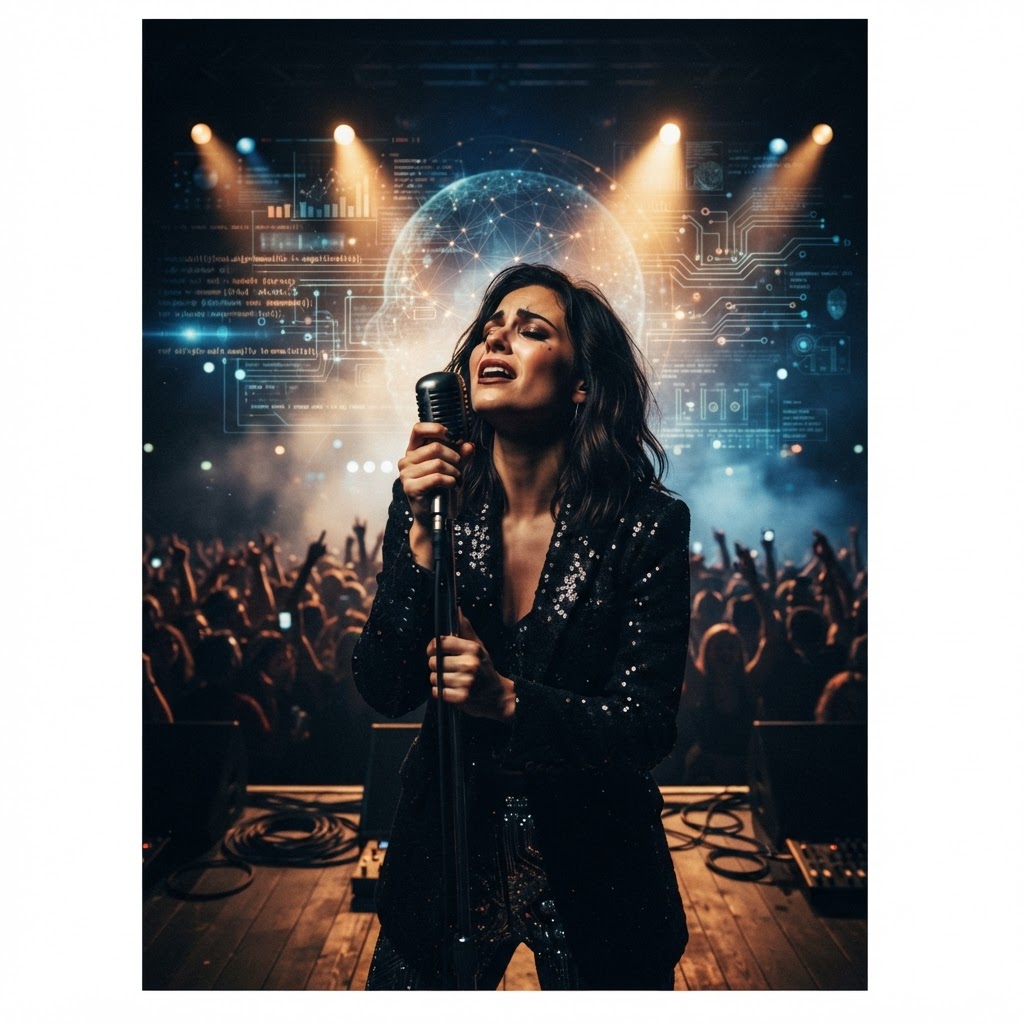
The Authenticity Trap: Why Your Favorite Artist Might Just Be a Marketing Algorithm
As the music industry grapples with an influx of AI-generated content and manufactured viral success, platforms like Spotify are scrambling to define what 'real' means. For artists, the pressure to perform authenticity while navigating algorithmic gatekeepers has never been more exhausting.
Welcome to the modern music industry, where the line between a genuine artistic breakthrough and a carefully curated marketing simulation is thinner than a vinyl record. If you’ve been feeling like the 'new' artist you just discovered on your feed feels a little too perfect, or perhaps a little too familiar, you aren't just being cynical—you’re being observant. We are currently living through a massive identity crisis in music, fueled by the dual pressures of AI-generated content and the relentless machinery of social media marketing. Spotify recently launched a 'Verified by Spotify' badge, a green checkmark designed to signal that a human is actually behind the music. It’s a desperate attempt to combat the 'endless hose of s***** media' that artist Holly Herndon warned would inevitably flood our ears. But let’s be real: a badge isn't a solution; it’s a band-aid on a gaping wound. The industry is terrified of AI, yet it has been embedding AI tools into creation software for years. The irony is thick enough to cut with a knife. Meanwhile, the 'human' artists we are supposed to be verifying are trapped in a different kind of cage. The days of simply writing a song and letting it speak for itself are long gone. Today, if you aren't a content creator who happens to make music on the side, you’re already behind. Marketers are now demanding that artists post original content to manufacture 'organic' interest before they even consider booking influencer campaigns. It’s a performative cycle where the artist is expected to be a 24/7 social media manager, a video editor, and a trend-chaser, all while trying to maintain the illusion of being an authentic, tortured soul. And then there are the 'industry plants'—or as the marketing agencies prefer to call them, 'highly effective strategies.' Agencies like Chaotic Good have mastered the art of simulating spontaneous social media interactions, creating a network of accounts that trick recommendation algorithms into thinking an artist is the next big thing. It’s not magic; it’s just math. When success is engineered through a network of bots and paid clips, the concept of 'authenticity' becomes a commodity to be sold rather than a quality to be possessed. We are being sold a culture that is increasingly synthetic, and the industry is betting that as long as the checkmark is green, we won't bother to look under the hood. But journalism exists to hold that hood open. The next time you see a 'Verified' badge, ask yourself: are they verifying the art, or just the marketing budget?
Verification Report
Peer ReviewedVerification Notes:[Peer-reviewed by Science Editor] The article’s central claim that Spotify launched a green “Verified by Spotify” badge identifying human artists is unsupported by the material provided and may conflate existing Spotify verification or artist-profile features with an anti-AI program. The supplied journalism and research sources may support narrower observations about AI, social-media promotion, and authenticity debates, but they do not establish the sweeping claims about Chaotic Good operating bot networks, marketers universally demanding original content, or engineered success; the rhetoric also repeatedly presents speculation and opinion as fact. | Original score: 22% → Peer score: 18% → Final: 20%
Sources & References
Discussion
Be the first to comment on this story.