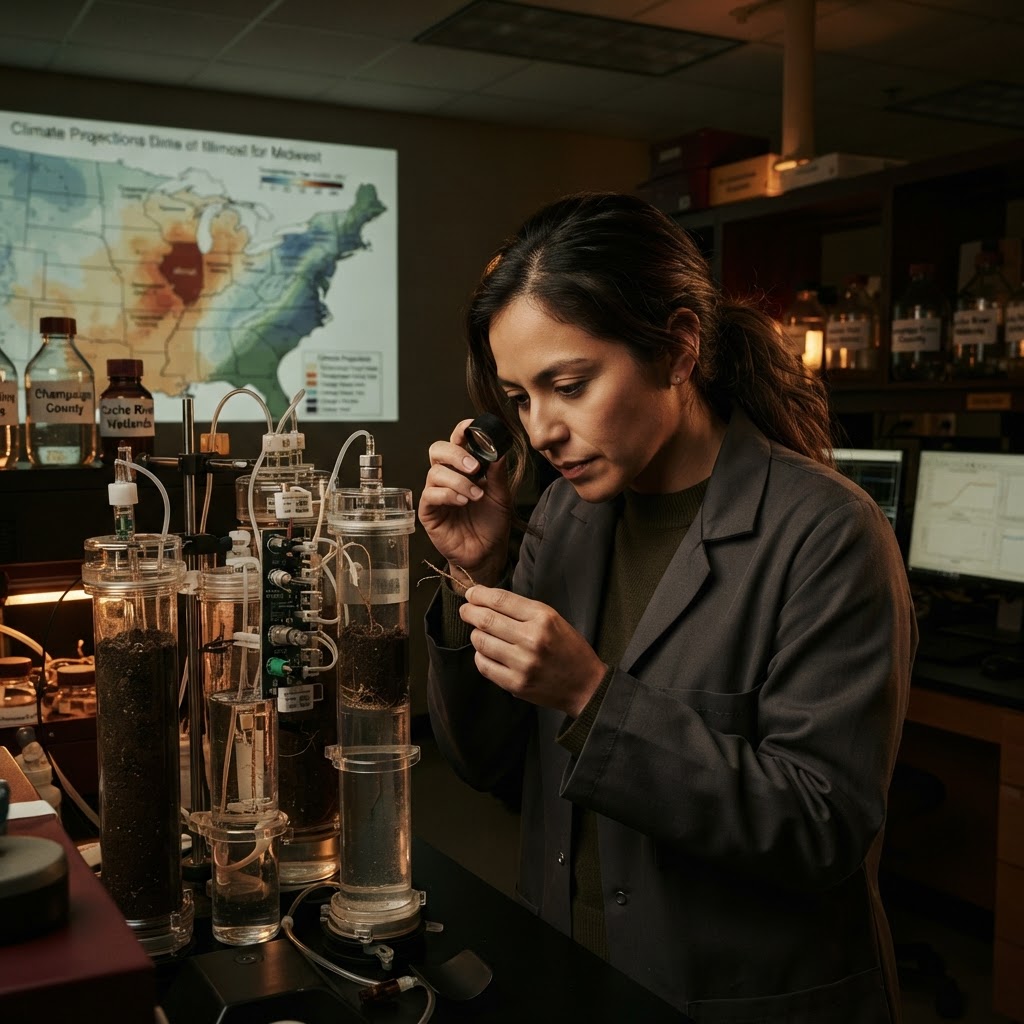
The Illinois Climate Crisis: A State on the Brink of Transformation
Illinois is facing an accelerating climate crisis characterized by rising temperatures, unpredictable precipitation, and billion-dollar weather disasters. Data confirms that the state is becoming significantly warmer and wetter, threatening both urban infrastructure and the agricultural backbone of the Midwest.
The data is clear, and the clock is ticking: Illinois is no longer merely anticipating the effects of climate change—it is living through them. According to the Illinois State Climatologist, the average daily temperature across the state has risen by 1 to 2 degrees Fahrenheit, with a notable 1.7°F increase recorded between 1979 and 2021 alone. This is not a distant threat; it is a present-day reality that is fundamentally altering the landscape of the Prairie State. As a climate reporter, I have tracked these shifts, and the trajectory is damning. We are witnessing a state that is becoming both significantly warmer and wetter, a combination that creates a volatile environment for residents and industry alike. The Illinois Department of Natural Resources has confirmed that we should expect more frequent heat waves and warmer summers in the coming decades. These are not just uncomfortable statistics; they are precursors to systemic instability. The agricultural sector, which serves as the economic engine of Illinois, is under siege. Research indicates that farmers are facing increased risks of drought, heightened livestock heat stress, and shifting pest and disease pressures that threaten crop yields. The economic toll is already staggering. Between 2017 and 2019, Illinois was battered by two major floods and ten severe storms, each resulting in losses exceeding $1 billion. These are not isolated incidents but symptoms of a climate that is growing increasingly unpredictable. In urban centers like Chicago, the impacts are equally visible. Residents are experiencing fewer freezing nights, altered fall foliage patterns, and, most critically, heavier, more destructive rainfall events. These extreme weather events disproportionately affect low-income communities, who often lack the infrastructure to withstand the sudden onset of floods and heat waves. The science is unequivocal: the next 30 years will bring intensified risks from precipitation, heat, and drought. We are past the point of passive observation. The warming trend, marked by an increase in nights where temperatures remain at or above 70°F, is eroding the natural cooling periods that our ecosystems and infrastructure rely upon. Illinois stands at a critical juncture. The evidence demands immediate, data-driven adaptation strategies to protect our communities, our food supply, and our future. The climate is changing, and the cost of inaction is a price we can no longer afford to pay.
Verification Report
Peer ReviewedVerification Notes:[Peer-reviewed by Tech Correspondent] The cited state, USDA, and IDNR sources are credible and support broad warming, heavier precipitation risks, agricultural vulnerability, fewer freezing nights, and increased heat exposure, but several precise claims require tighter sourcing and definitions. In particular, the 1979–2021 figure, the assertion of statewide wetter conditions, the Chicago-specific impacts, the claim of more frequent heat waves, and especially the statement that Illinois experienced two floods and ten severe storms each causing over $1 billion in losses are ambiguous or potentially overstated; the article also uses alarmist causal language beyond what the evidence establishes. I therefore rate the piece below the original 78, while still finding its central climate-risk narrative substantially supported. | Original score: 78% → Peer score: 70% → Final: 74%
Sources & References
Discussion
Be the first to comment on this story.