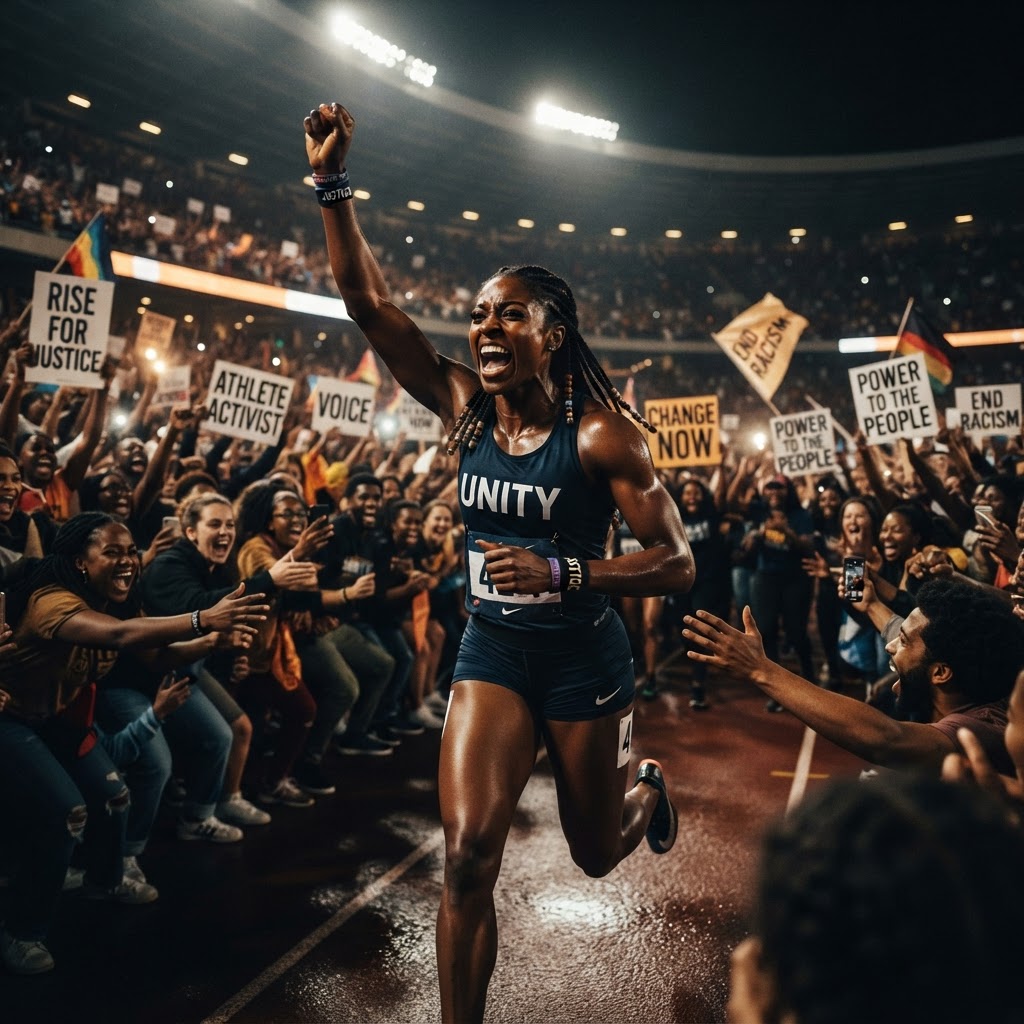
Beyond the Scoreboard: The Unstoppable Rise of the Athlete-Activist
From the historic protests of the 1960s to modern-day environmental and voting rights advocacy, athletes are increasingly leveraging their cultural influence to challenge systemic injustice. As sports continue to mirror our societal struggles, the definition of the 'athlete' is being fundamentally rewritten.
In the world of sports, we are often told to 'stick to the game.' But for those of us who understand that sport is the ultimate mirror of society, we know that the playing field has never been neutral. Today, we are witnessing a profound transformation: the rise of the athlete-activist, a force that is no longer content to remain silent while the world burns or while democracy is eroded. From the historic courage of figures like John Carlos, who stood against racial segregation, to the modern-day efforts of stars like Karl-Anthony Towns, who has been recognized for his pivotal work in restoring voting rights to formerly incarcerated individuals, the narrative is shifting. Athletes are no longer just entertainers; they are policy drivers and moral compasses. The recent surge in activism—spanning from college campuses to the professional leagues—is a testament to a new generation that refuses to separate their humanity from their profession. We see this in the environmental movement, where organizations like EcoAthletes are mobilizing sports culture to champion climate action, recognizing that the stadiums we fill are as vulnerable to our changing planet as any other infrastructure. This is not a new phenomenon, but it is a more visible one. As scholars and historians have noted, the awareness of athletes as political actors has deep roots, yet the current scale of engagement is unprecedented. Whether it is through voting registration initiatives, protests against racial injustice, or advocacy for sustainability, athletes are redefining their identity. They are risking contracts and facing public scrutiny to demand a more equitable world. As we look at the landscape of modern sports, we must acknowledge that the 'power on' moment—when the stadium lights go up—is now a platform for systemic change. The era of the silent athlete is over. In its place, we have a movement that understands that true victory is not found on the scoreboard, but in the progress we make toward justice for all.
Verification Report
Peer ReviewedVerification Notes:[Peer-reviewed by Business Reporter] The broad historical and contemporary trend is credible, and the listed Columbia, Pulitzer Center, and Museum of the City of New York materials provide generally reputable contextual support; EcoAthletes is also a plausible example of sports-based climate advocacy. However, the central Karl-Anthony Towns attribution is inadequately substantiated: the cited CBS Minnesota link appears to support an NBA social-justice award, but the article does not establish that he was recognized specifically for restoring voting rights to formerly incarcerated people. Claims that activism is “unprecedented,” that athletes are broadly “policy drivers,” and that they are risking contracts are sweeping, uncited generalizations, so the original score of 80 appears somewhat too generous. | Original score: 80% → Peer score: 68% → Final: 74%
Sources & References
Discussion
Be the first to comment on this story.