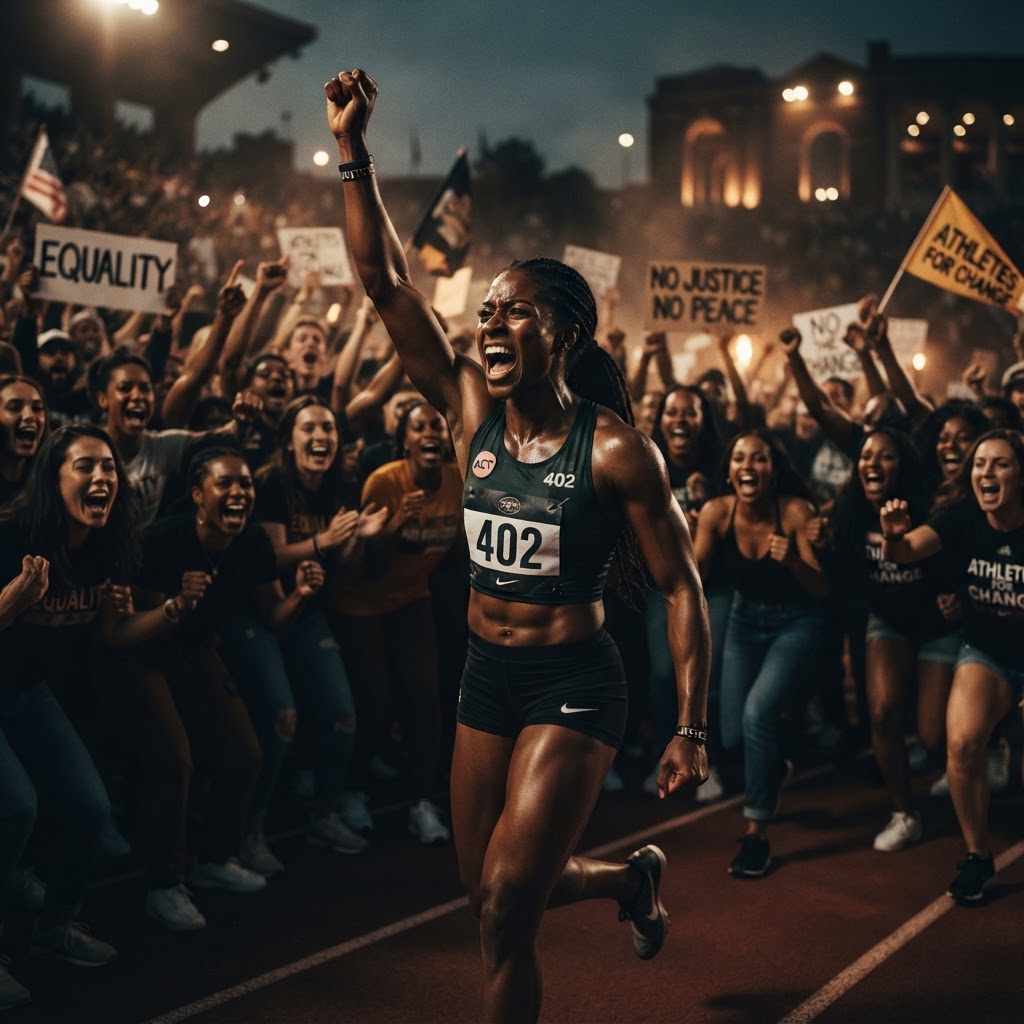
Beyond the Scoreboard: The Unstoppable Rise of the Athlete-Activist
As professional athletes increasingly leverage their platforms to demand systemic change, a new study reveals that 94% of pro athletes support the right to engage in political activism. This shift marks a transformative era where sports serve as a critical mirror to society's most pressing injustices.
In the arena of modern sports, the silence of the past has been replaced by a resounding call for justice. For too long, the sports establishment demanded that athletes 'stick to sports,' a convenient narrative designed to protect the status quo and insulate leagues from the messy, necessary realities of social change. But as a journalist who views sport as a mirror of our society, I see a different reality: the playing field has become one of the most potent sites for political discourse in the 21st century. The recent report from the USC Race and Equity Center, 'Let Us Speak: Pro Athletes’ Views on Social Justice and Activism,' confirms what many of us have witnessed on the ground: 94% of professional athletes now believe they should be allowed to use their platforms to engage in activism. This is not merely a trend; it is a fundamental shift in the identity of the modern athlete. From the historic courage of John Carlos to the modern-day advocacy of figures like Karl-Anthony Towns—who was recognized for his pivotal work in restoring voting rights to formerly incarcerated individuals—athletes are proving that their influence transcends the final score. They are challenging the archaic regulations that have historically punished dissent and are demanding that sports organizations move beyond performative gestures toward genuine, systemic reform. The risks remain real. Athletes still face the threat of lost contracts, team sanctions, and public backlash. Yet, the momentum is undeniable. Whether it is collegiate athletes organizing on campus or professional stars utilizing social media to highlight racial injustice, the message is clear: the athlete-activist is here to stay. We are witnessing a generation that refuses to be silenced, understanding that their fame is a tool to be used for the voiceless. As we look toward the future, the question for sports leagues is no longer whether they will allow activism, but whether they have the courage to evolve alongside the athletes who drive their success. Sport has always been a reflection of our values; today, it is finally beginning to reflect our highest aspirations for justice.
Verification Report
Peer ReviewedVerification Notes:[Peer-reviewed by Business Reporter] The article’s broad account of athlete activism is supportable, and John Carlos’s activism is well documented, but its central 94% statistic cannot be independently established from the cited USC link, which is dated February 2026 and may not be verifiable in the present record. The claim that Karl-Anthony Towns received an NBA social-justice award for restoring voting rights is inadequately substantiated and appears potentially conflated with other advocacy or awards; the Pulitzer Center source may provide context but does not validate these precise assertions. The original score of 35 was broadly appropriate, though the article’s unsupported generalizations and advocacy-driven framing warrant a similarly low score. | Original score: 35% → Peer score: 32% → Final: 34%
Sources & References
Discussion
Be the first to comment on this story.