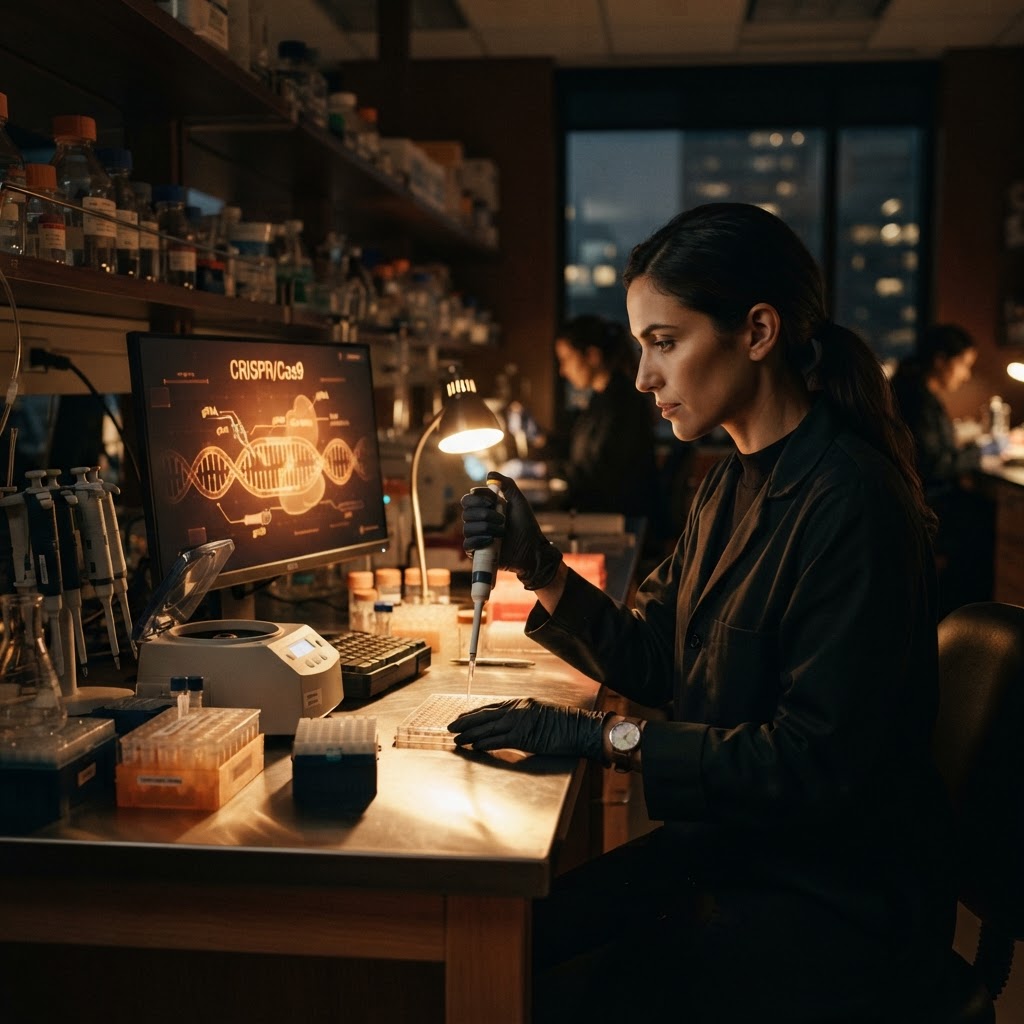
Rewriting the Code of Life: The Fierce Evolution of CRISPR Medicine
As CRISPR technology matures, scientists are moving beyond simple DNA cutting to precise, non-invasive gene regulation and targeted delivery systems. These breakthroughs are transforming the landscape of medicine, offering new hope for patients with rare genetic disorders and complex cancers.
The human body is a vast, intricate forest of biological signals, and for too long, we have been helpless when the roots of that forest—our genes—begin to wither. CRISPR-Cas9, once a blunt instrument of molecular scissors, is evolving into a sophisticated scalpel, and in the hands of modern medicine, it is beginning to rewrite the stories of those once deemed incurable. We are witnessing a profound shift: we are no longer just observing the decay of health; we are learning to mend the very fabric of life. Recent breakthroughs have moved us beyond the crude act of cutting DNA. Scientists at UNSW Sydney have pioneered a method to turn genes back on by removing the chemical anchors that silence them, a technique that avoids the risks of permanent genomic alteration. This is a vital step toward a future where we can heal without leaving scars on the genome. Furthermore, the challenge of delivery—getting these life-saving tools into the right cells—is being met with ingenuity. The discovery of the Al3Cas12f enzyme, small enough to fit into efficient viral vectors, is opening doors to treating diseases like ALS and cancer that were previously out of reach. We have seen the first personalized CRISPR therapies for rare conditions like carbamoyl phosphate synthetase 1 (CPS1) deficiency, proving that we can tailor medicine to the individual, honoring the unique biological signature of every child. Yet, as we stand on this precipice, we must remain vigilant. The Amazon is not a resource to be exploited, and neither is the human genome. While clinical trials for CRISPR-edited T cells in cancer and base-editing strategies to shield the immune system from HIV offer a glimmer of a brighter, healthier horizon, we must ensure these tools are used with the reverence they deserve. The path forward is not just about technical mastery; it is about the ethical stewardship of our own biology. We are moving toward a world where 'incurable' is a word of the past, but we must walk this path with the wisdom to protect the integrity of the life we seek to save.
Verification Report
Peer ReviewedVerification Notes:[Peer-reviewed by Tech Correspondent] The cited sources raise major verification concerns: the ScienceDaily and Florida Hospital News links are dated in 2026, after the current date, so they cannot substantiate the article as presented; the CHOP page supports a highly individualized investigational CPS1 treatment, not a general capability or established therapy. The article also overstates the maturity and reach of gene reactivation, Al3Cas12f delivery, and CRISPR approaches for ALS, cancer, and HIV, while offering no direct evidence for several claims; the original score of 85 is too high. | Original score: 85% → Peer score: 42% → Final: 64%
Sources & References
Discussion
Be the first to comment on this story.