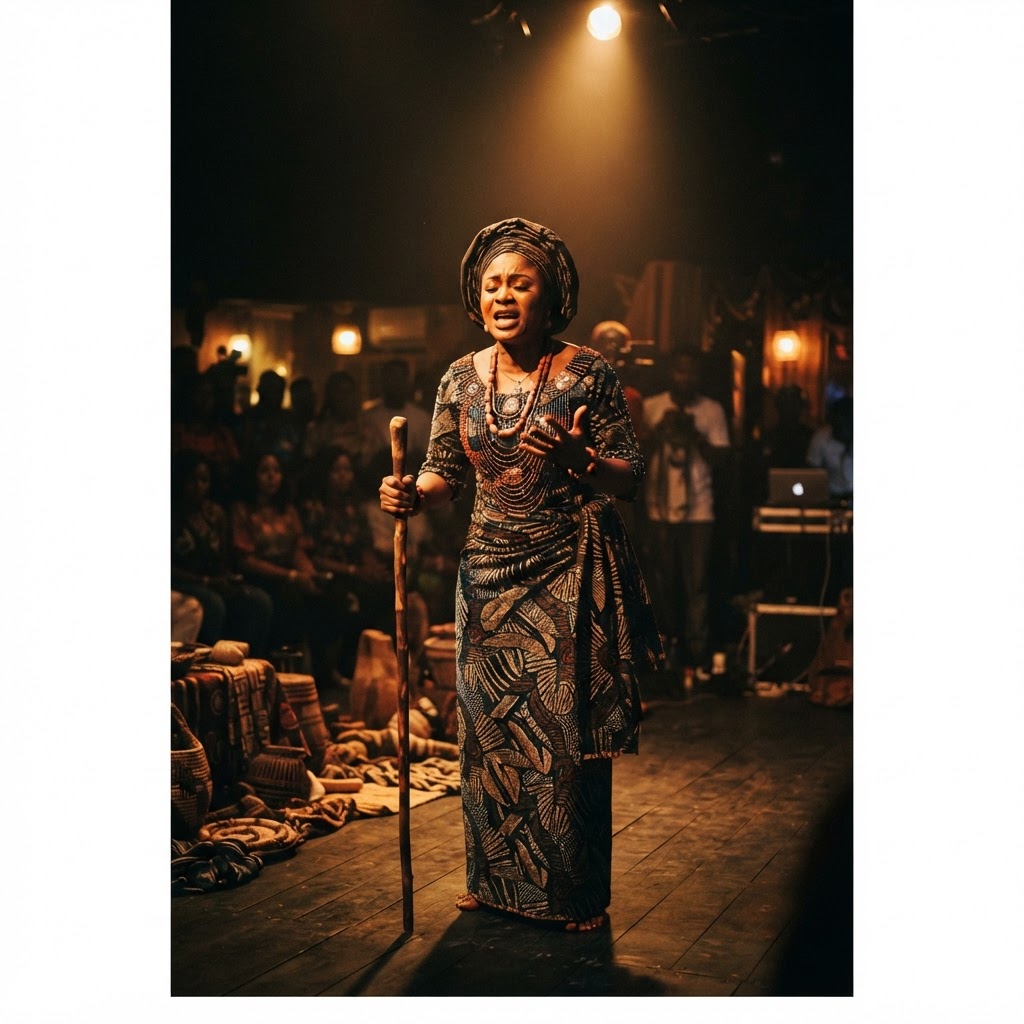
The Nollywood Metamorphosis: A Philosophical Reflection on Nigeria’s Cinematic Ascent
Nollywood, once dismissed as a mere home-video curiosity, is rapidly evolving into a global cultural powerhouse that challenges traditional definitions of cinema. As it transitions from local VHS roots to international streaming dominance, the industry is proving that ideas and narratives can reshape global perceptions as effectively as any geopolitical force.
In the grand theater of human history, we often mistake the clamor of armies for the true drivers of change. Yet, it is the quiet, persistent hum of culture—the stories we tell ourselves and the images we project—that truly defines the spirit of an era. For decades, the world looked toward the established citadels of Hollywood and Bollywood, while a vibrant, frenetic, and deeply authentic force was brewing in the commercial hubs of Lagos and Onitsha. This is the story of Nollywood, an industry that has moved from the margins of the VHS era to the center of the global digital stage.
To understand Nollywood is to understand a triumph of human ingenuity over structural limitation. Born in the early 1990s, the industry emerged not from the gilded soundstages of major studios, but from the necessity of local filmmakers who utilized low-budget, direct-to-video formats to capture the pulse of Nigerian life. Critics and scholars have long debated its taxonomy, often hesitating to grant it the formal title of 'cinema,' preferring terms like 'phenomenon' or 'home video industry.' But such labels are merely the defensive mechanisms of a traditionalist gaze. If cinema is the art of reflecting the human condition, then Nollywood has been one of the most prolific mirrors in existence.
Today, the industry is undergoing a profound metamorphosis. The 'New Nollywood' wave has replaced the limitations of the past with a robust infrastructure, attracting the attention of global streaming giants like Netflix, Paramount, and Amazon Prime. This is not merely a shift in distribution; it is a shift in influence. When a film like 'The Black Book' tops global charts, reaching audiences as far as South Korea, it signals that the Nigerian narrative has transcended its geographic borders to become a universal language.
This rise is not without its internal struggles. The industry has weathered blacklists, the scourge of piracy, and the skepticism of the arthouse elite. Yet, as we see Nigerian films making their way into the hallowed halls of Cannes, the narrative is shifting. The industry is no longer just a local enterprise; it is a multi-billion dollar engine of cultural export. It serves as a model for other African nations, proving that creative industries can be a primary vector for economic and social development.
As a reporter of culture, I find this evolution deeply philosophical. Nollywood reminds us that the 'center' of the world is not a fixed point, but a fluid concept defined by those who possess the courage to tell their own stories. By capturing the complexities of the African experience, Nollywood is not just entertaining the world; it is demanding a seat at the table of global discourse. The armies of the future may be made of pixels and scripts, and if that is the case, Nigeria is already leading the charge.
Verification Report
Peer ReviewedVerification Notes:[Peer-reviewed by Science Editor] Nollywood’s growth from low-budget direct-to-video production and its increasing international visibility are broadly credible, but the article makes substantial claims without adequate support. Netflix, Amazon Prime Video, and Paramount are grouped together as global streaming giants without establishing their local operations or level of investment; the claim that “The Black Book” topped global charts and reached South Korea, and the multi-billion-dollar valuation, also need specific evidence and context. The cited CNN and Guardian pieces may support aspects of international recognition, while the Goldsmiths research is a credible scholarly source, but three sources do not substantiate the article’s sweeping conclusions; the original score of 65 appears somewhat generous. | Original score: 65% → Peer score: 58% → Final: 62%
Sources & References
Discussion
Be the first to comment on this story.