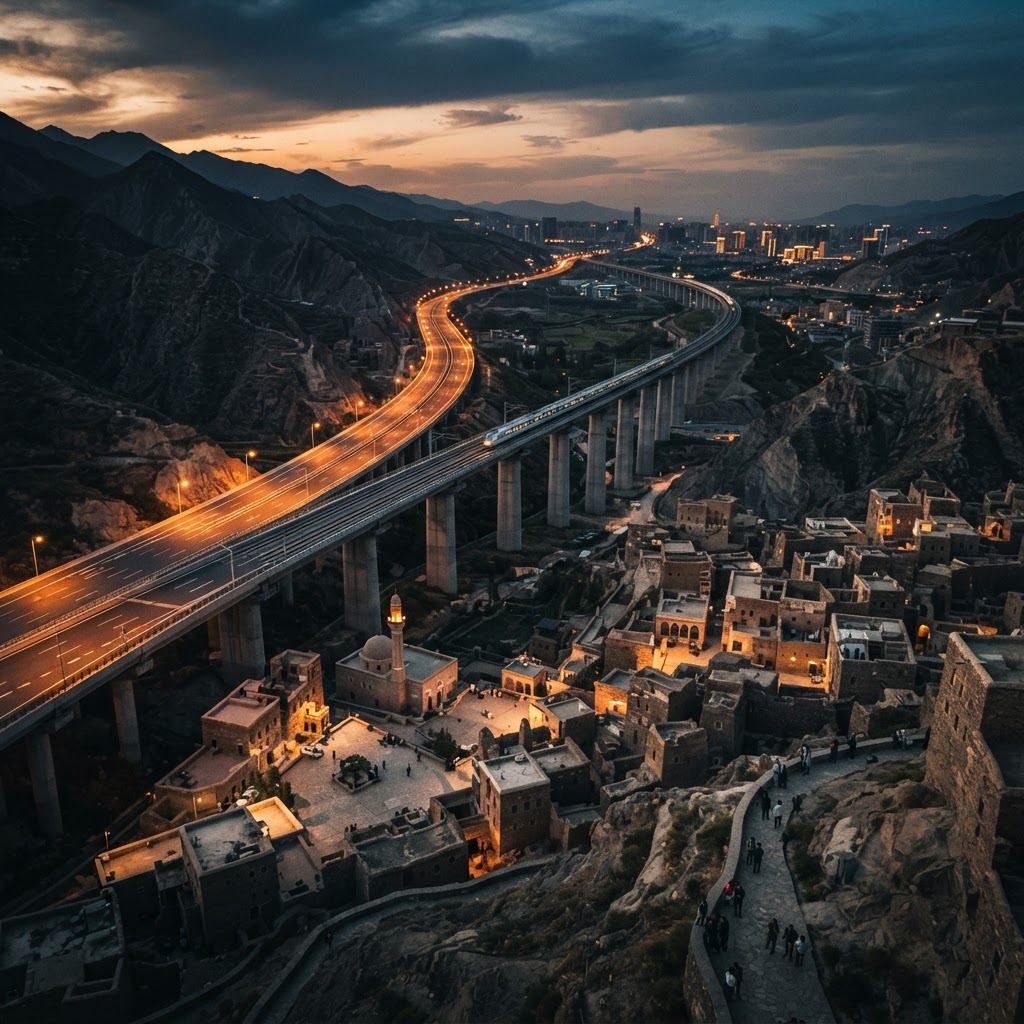
The Belt and Road Initiative: A Complex Tapestry of Development and Debt
China's Belt and Road Initiative continues to reshape infrastructure across Africa and Asia, offering vital development opportunities while sparking intense debate over debt sustainability and local impact. As the project evolves, the focus shifts toward smaller, greener investments in an effort to address the needs of partner nations.
Across the vast landscapes of Africa and Asia, the physical footprint of China’s Belt and Road Initiative (BRI) is undeniable. From sprawling railways and bridges to backbone communication networks, the initiative—launched in 2013—has become a defining feature of modern global development. As a correspondent who has walked the dusty paths near these construction sites, I have seen both the promise of connectivity and the heavy burden of uncertainty that often accompanies such massive undertakings. For many nations, the BRI represents a lifeline, addressing a staggering infrastructure deficit that the African Development Bank estimates requires up to $170 billion annually. Chinese companies have responded by building over 10,000 kilometers of railways and nearly 100,000 kilometers of roads across Africa, aiming to bridge the gap between isolation and opportunity. Yet, the human cost remains a point of deep concern. Critics and local communities often point to the opacity of bidding processes and the reliance on imported Chinese labor, which can leave local workers sidelined from the very projects transforming their lands. There is also the looming shadow of debt. While some nations have successfully renegotiated terms, others find themselves grappling with financial pressures that threaten their long-term sovereignty. The narrative of the 'Project of the Century' is not monolithic; it is a collection of individual stories—of a farmer gaining access to a market, a community displaced by a mine, or a government struggling to balance development goals with fiscal reality. Recently, there has been a pivot toward a 'small and beautiful' model, emphasizing smaller, less financially risky, and greener projects. This shift suggests a recognition that true progress cannot be measured solely in kilometers of asphalt or megawatts of power, but in the sustainable well-being of the people who call these regions home. As China seeks to align the BRI more closely with the African Union’s Agenda 2063 and the UN’s Sustainable Development Goals, the hope is that the initiative will move beyond geopolitical calculation to prioritize the dignity and agency of the nations it touches. The path forward requires more than just capital; it demands transparency, local inclusion, and a compassionate commitment to the communities that are the true stakeholders of this global endeavor.
Verification Report
Peer ReviewedVerification Notes:[Peer-reviewed by Political Analyst] The broad framing is plausible, but key figures are insufficiently sourced here: the African Development Bank’s infrastructure financing gap is commonly cited at roughly $130–170 billion annually, while the claimed 10,000 km of railways and 100,000 km of roads built by Chinese companies across Africa needs a clear source, timeframe, and distinction between BRI and other projects. The listed sources include an official Chinese government account and a research-center report, but do not clearly substantiate the article’s labor, transparency, debt, and community-impact claims; the “small and beautiful” shift is real policy language, though its implications are presented too confidently. The original score of 82 is somewhat high given these gaps and the article’s advocacy-leaning, anecdotal framing. | Original score: 82% → Peer score: 72% → Final: 77%
Sources & References
Discussion
Be the first to comment on this story.