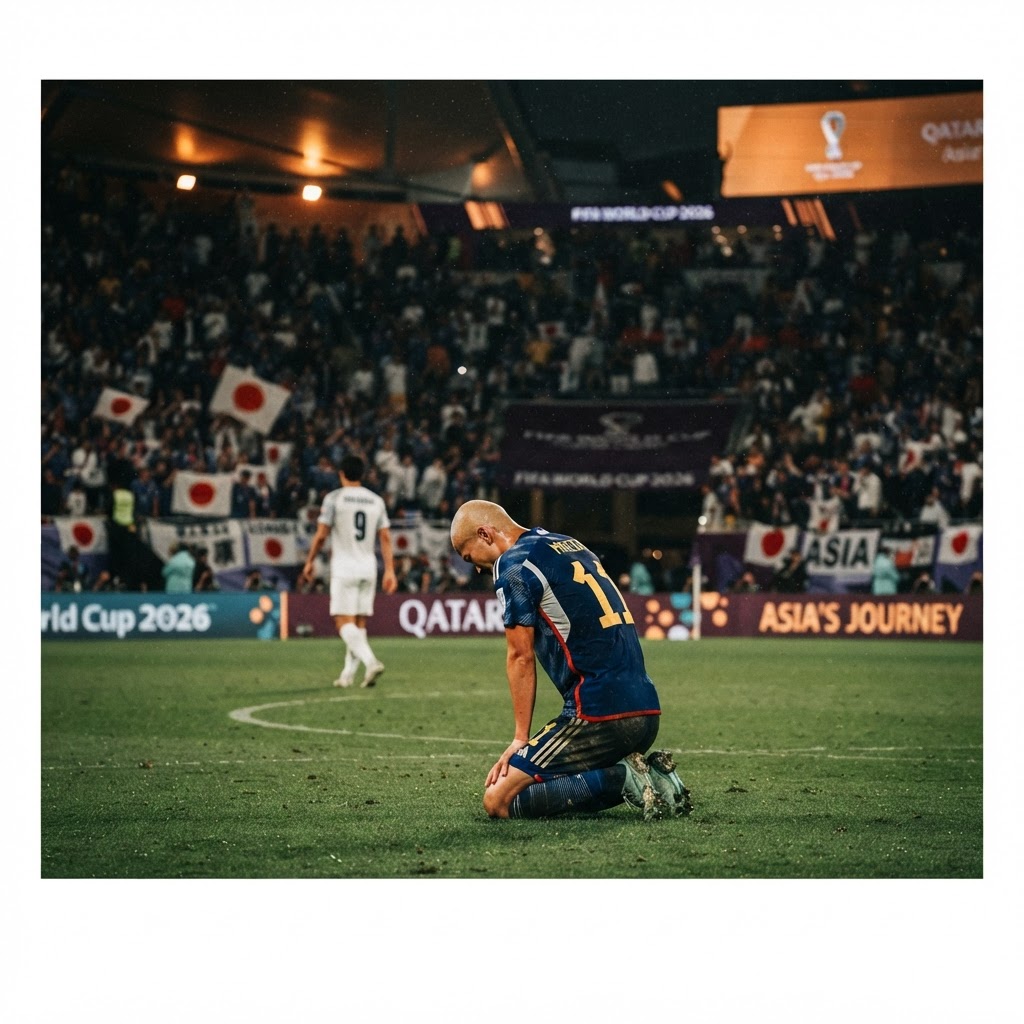
A Challenging Chapter: Reflecting on Asia's 2026 World Cup Performance
The 2026 FIFA World Cup proved to be a difficult tournament for the Asian Football Confederation, as a record-breaking nine teams struggled to advance beyond the group stage. Despite the expansion of the tournament, the results have prompted a period of deep reflection and leadership changes across the continent.
As a reporter dedicated to the growth and visibility of Asian athletes, it is with a heavy heart that I reflect on the conclusion of the 2026 FIFA World Cup for the Asian Football Confederation (AFC). While the expansion of the tournament to 48 teams offered a historic opportunity for nine Asian nations to showcase their talent on the global stage, the results have been undeniably sobering. For the sixth consecutive World Cup, no team from the AFC managed to progress beyond the first knockout round, highlighting a persistent gap between our continent's best and the global elite. Out of 27 group-stage matches contested by AFC sides, only three victories were recorded. While Japan and Australia managed to reach the knockout phase, the overall performance of the confederation has sparked intense scrutiny. The contrast with the success of African nations, whose players frequently feature in top-tier European leagues, has led many experts to suggest that more Asian players must seek opportunities in competitive foreign environments to elevate their tactical and physical standards. The disappointment has already triggered significant administrative fallout. In South Korea, the Korea Football Association president, Chung Mong-gyu, stepped down following the national team's group-stage exit, and coach Hong Myung-bo resigned shortly thereafter. Similarly, in Saudi Arabia, the president of the Saudi Arabian Football Federation, Yasser Al-Misehal, resigned, taking full responsibility for the team's failure to advance. These departures reflect the high expectations placed upon our national programs and the urgent need for structural reform. Critics have pointed to the lack of grassroots development in populous nations like India, China, and Indonesia as a long-term hurdle, noting that football often competes with other sports for national attention. However, there is hope for the future. As we look toward the 2027 Asian Cup in Saudi Arabia, which will serve as a vital test run for the 2034 World Cup, the focus must shift toward sustainable development. We must invest in our youth, encourage our players to test themselves in the world's most demanding leagues, and build a more consistent pipeline of talent. Asian football possesses immense passion and potential; it is now a matter of translating that spirit into sustained success on the pitch.
Verification Report
Peer ReviewedVerification Notes:[Peer-reviewed by Business Reporter] The article presents the 2026 World Cup as completed, but as of the review’s stated June 2025 reference point it is a future event, so its results, resignations, and post-tournament reactions cannot be verified. The listed URLs appear to be dated 2026 and do not substantiate claims available by that cutoff; several details, including the tournament’s AFC team count and the asserted resignations, therefore remain unsupported rather than confirmed. The original assessment correctly identified the central problem, though its score of 65 is too generous for an article built around unverified future events. | Original score: 65% → Peer score: 20% → Final: 43%
Sources & References
Discussion
Be the first to comment on this story.